The product
Every CT read. The worst cases first. Every grade explained.
Six real screens from the portal take a physician from a full archive to a reviewed, approved study.
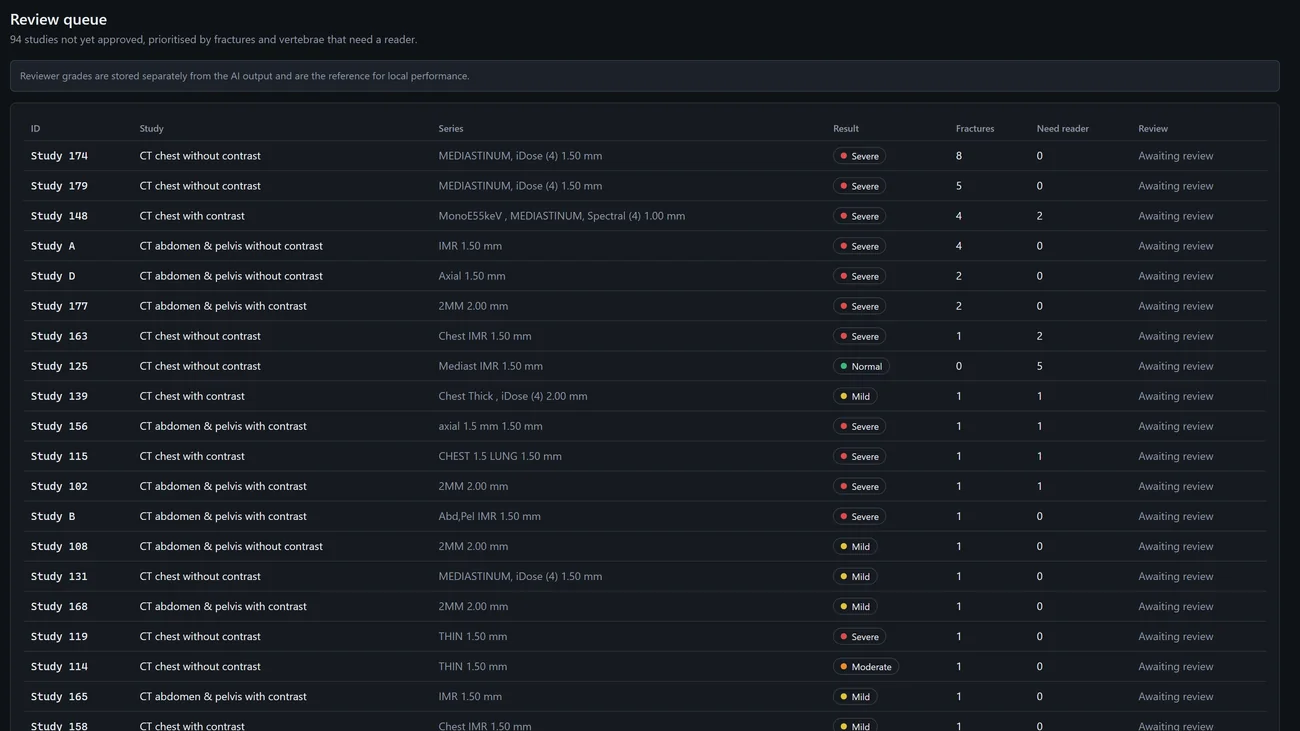
A prioritised review queue
Every CT is analysed automatically as it arrives. Patients with the most fractures rise to the top, so attention goes where it matters most.
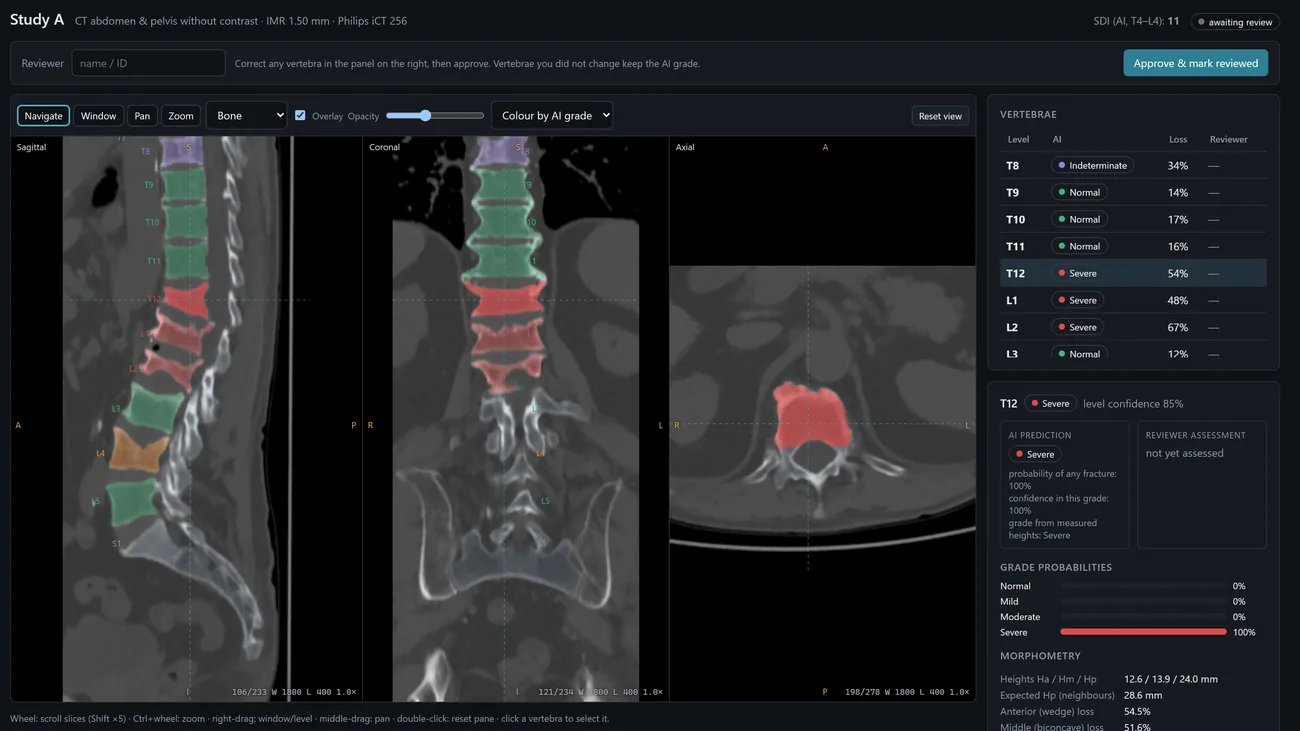
Every vertebra outlined, numbered and graded
The study opens in a multiplanar viewer: sagittal, coronal and axial planes, linked. Each vertebra is colour-graded for severity. Green is normal, orange moderate, red severe.
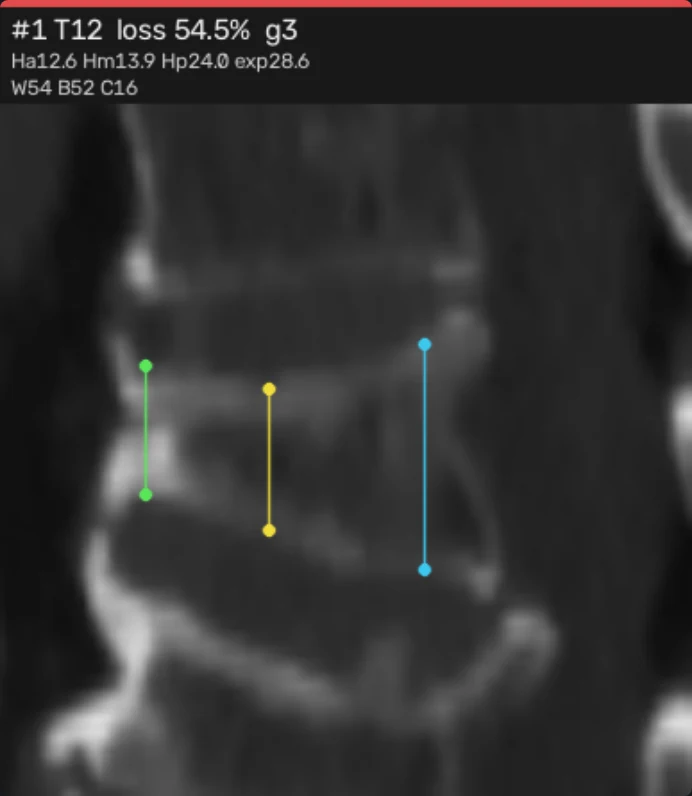
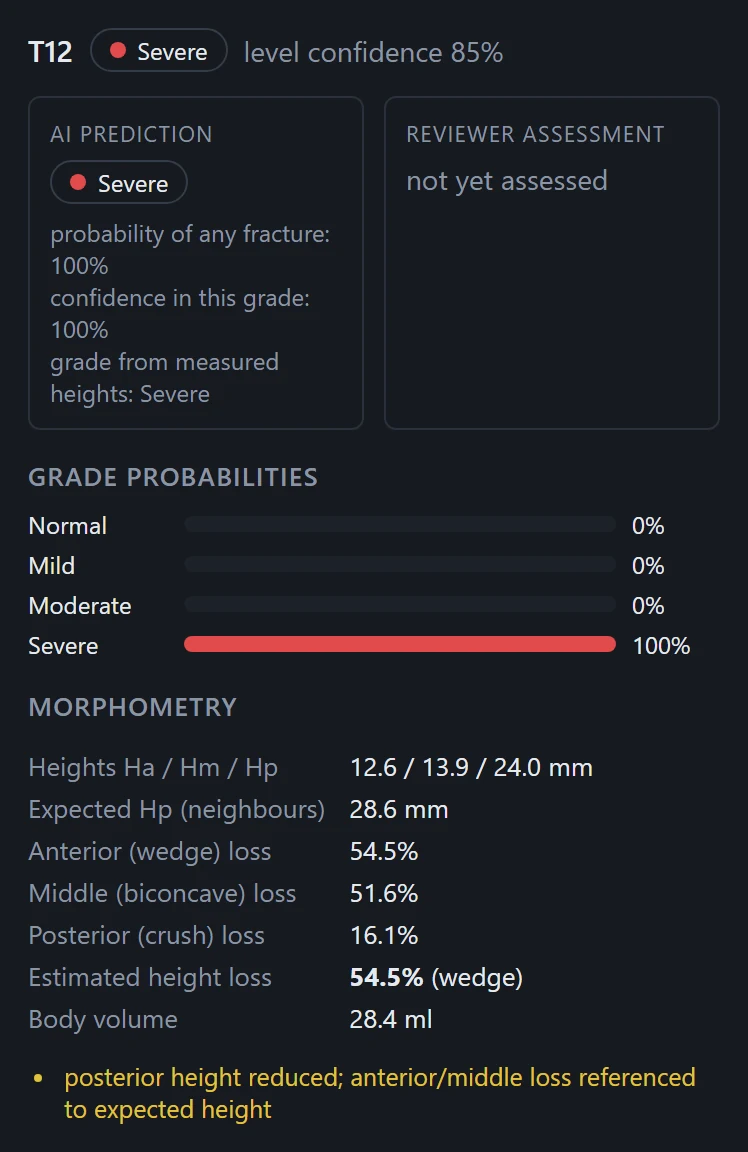
It shows its work
At T12 the front of the bone measures 12.6 mm. Judged against its neighbours it should be about 27.7 mm: a 54.5% loss of height. Every grade traces back to numbers a physician can check.
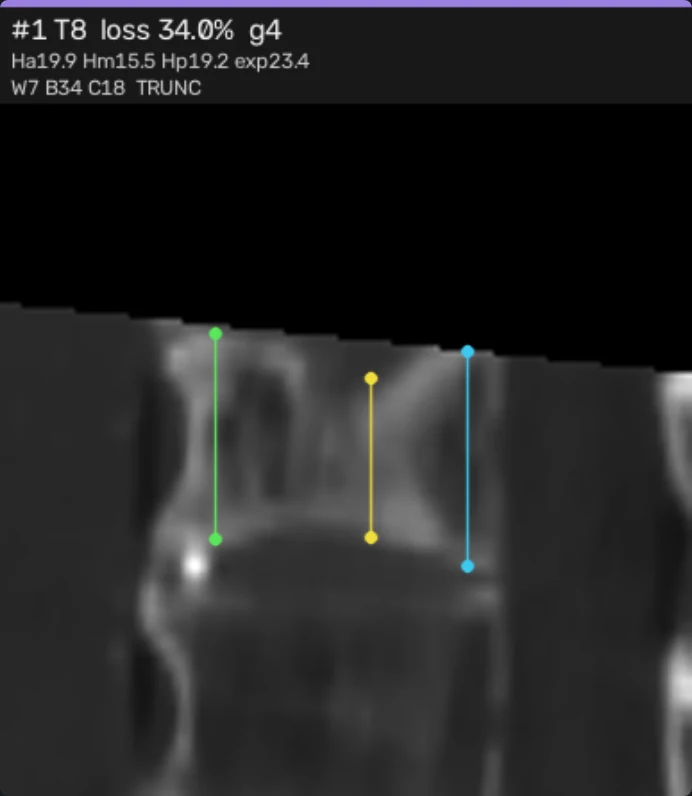
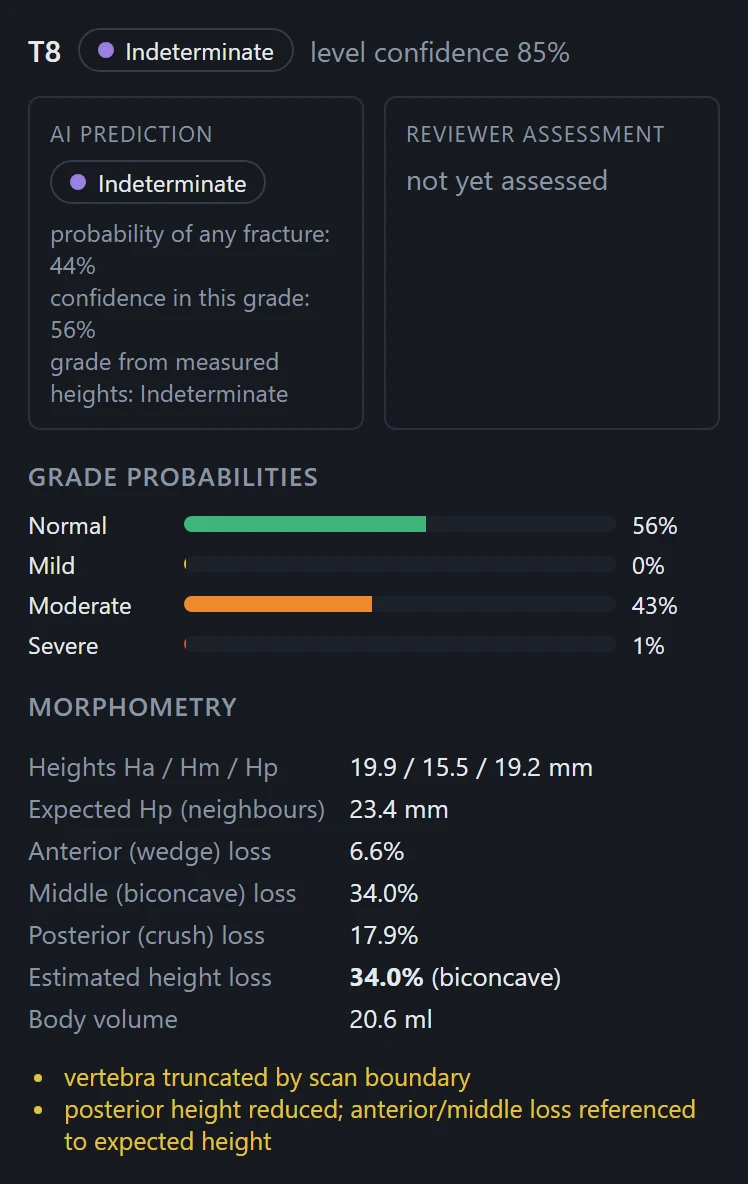
It knows what it does not know
T8 is cut off by the edge of the scan. Instead of guessing, the system marks it purple, indeterminate, and states the reason, so a human reads it.
The physician decides
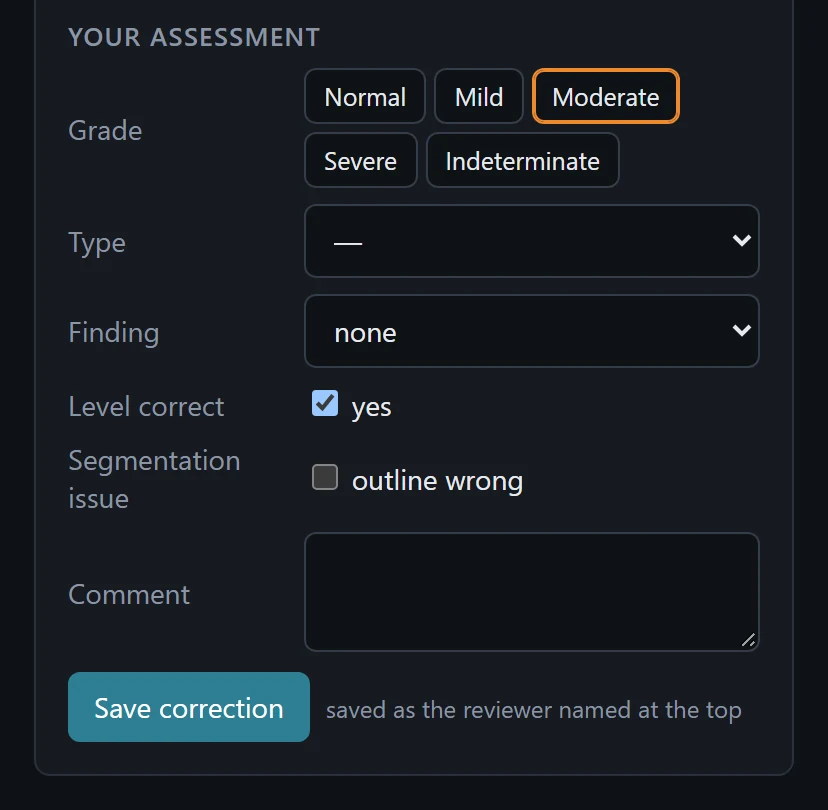
Any grade can be corrected in two clicks, then the study is approved. Each correction is stored beside the original AI grade, with the reviewer's name.

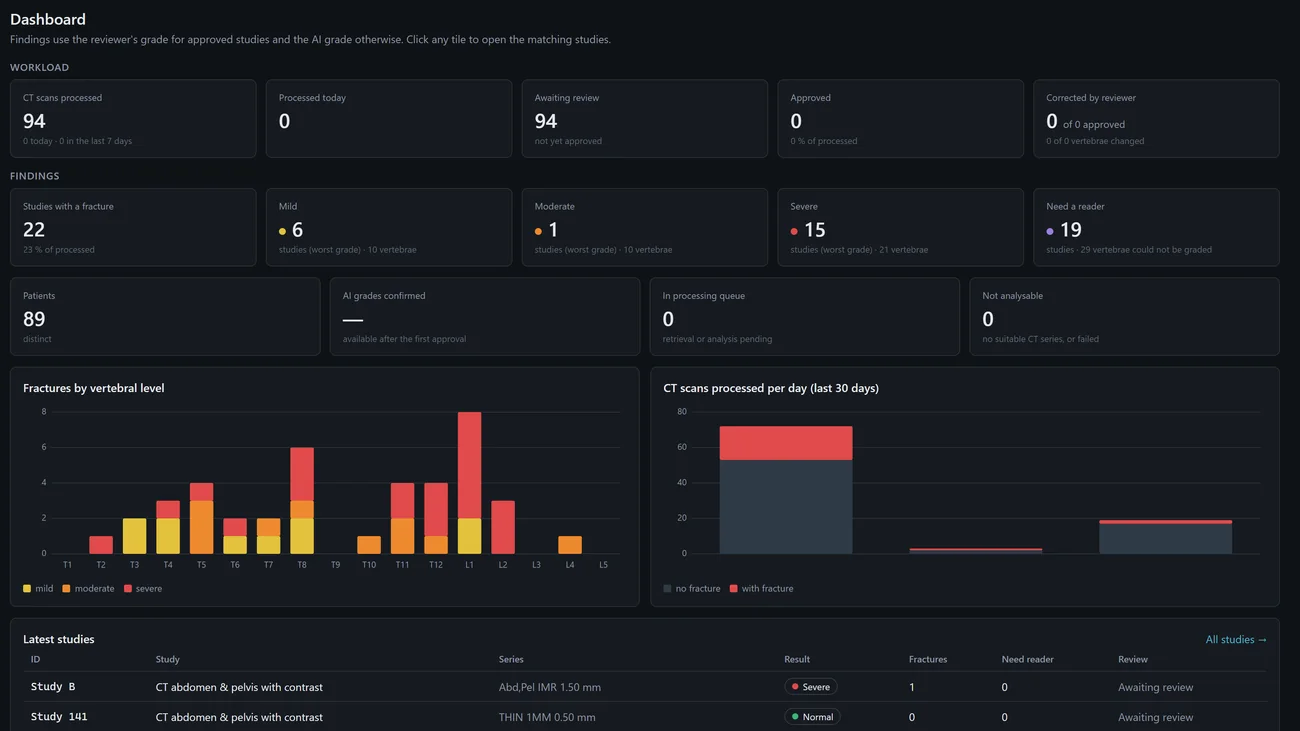
An operational overview
Workload, findings by severity and by vertebral level, and how often reviewers confirm the AI grade, on one screen.
Real screens from the portal, on real CT studies. Select an image to enlarge it.Swipe across an image to see the rest of it. Study identifiers were replaced before capture.